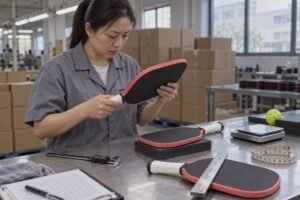
Buyers ask me weekly who covers sample fees and shipping for custom pickleball paddles from China. Vague answers stall projects, so here is how our Dongguan factory actually handles it.
The buyer covers both the sample fee and international shipping for custom pickleball paddles from China. Sample fees typically run $30–$150 per paddle, and express shipping adds $25–$120. Many factories refund or deduct the sample fee once the buyer places a qualifying bulk order.
That is the short answer. But the details matter. Fees vary with customization level. Shipping terms are negotiable. Refund policies differ from factory to factory. Below, I break down what is normal, what you can negotiate, and what you must get in writing before any sample goes into the hot press.
How Much Should I Expect to Pay for a Custom Pickleball Paddle Sample?
Last month, a distributor from Manila messaged us on WhatsApp with one blunt question: what will one branded sample cost? Her caution was smart, because sample quotes vary widely.
Expect to pay $30–$150 for a custom pickleball paddle sample from a Chinese factory. Simple logo prints on stock molds sit at the low end. T700 carbon fiber surfaces, proprietary mold creation, and special textures push quotes toward the top of that range.
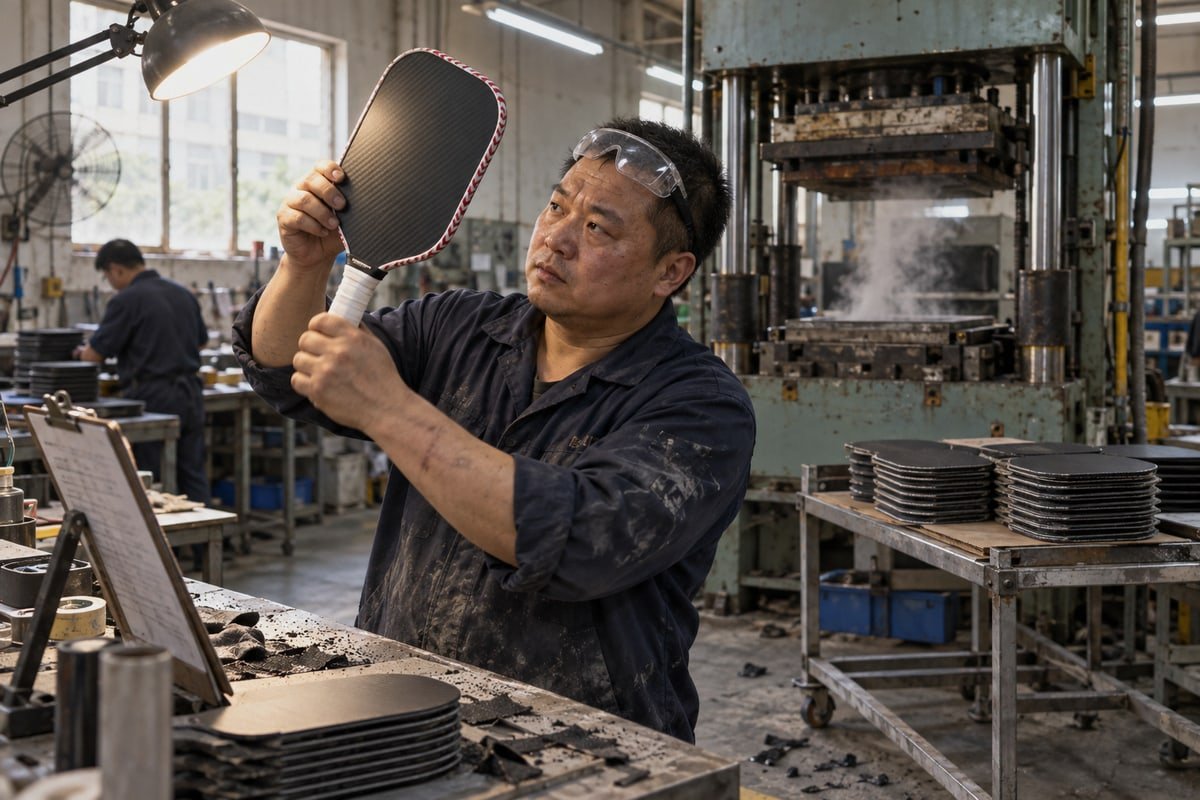
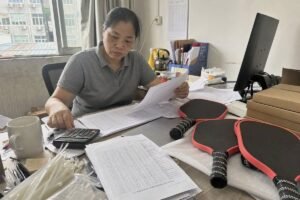
The price spread exists for a simple reason. A sample is not pulled off a shelf. Our team stops a production line, loads your artwork, presses your paddle, and inspects it by hand. The more custom work involved, the higher the fee. Here is how the ranges usually break down in our private label manufacturing quotes and across the industry:
| Customization Level | Typical Sample Fee | What You Get |
|---|---|---|
| Stock paddle with your logo | $30–$60 | Existing mold, standard graphics, fast turnaround |
| Full custom graphics on a stock shape | $60–$100 | Your complete brand design on a proven mold |
| Custom mold, T700 surface, or special texture | $100–$150+ | Proprietary shape and premium carbon fiber surface 1 |
What Drives the Sample Price Up?
Three things move a quote from $40 to $140. First, the surface material. A raw T700 carbon fiber surface costs far more than a fiberglass face. Second, the mold. A new elongated or widebody shape needs mold setup before any prototype development can start. Third, compliance. If you want the paddle built to USAPA approval standards from day one, we use certified production materials, not cheap stand-ins.
Why You Should Budget for Two or Three Samples
I always tell first-time buyers to order two or three samples. Compare feel, finish, and durability across thicknesses, such as 16mm versus 14mm cores. Yes, this raises your total sample and shipping spend. But it dramatically reduces your risk before you commit to a bulk run. One extra $80 sample is cheap insurance against a $10,000 mistake.
One more trend worth noting: in 2026, more factories are advertising refundable sample fees because competition among custom paddle suppliers keeps rising. That is good leverage for you, and I cover exactly how it works in the next section.
Will My Sample Fee Be Refunded If I Place a Bulk Order?
Early in our OEM ODM services journey, we lost a good prospect because refund terms lived only in a chat thread. Now every sample cost refund promise goes on the invoice.
Yes, most Chinese paddle factories refund the sample fee or deduct it from your first bulk invoice once you meet the minimum order quantity. Shipping costs are almost never refunded. Always get the refund policy in writing before sample production begins.
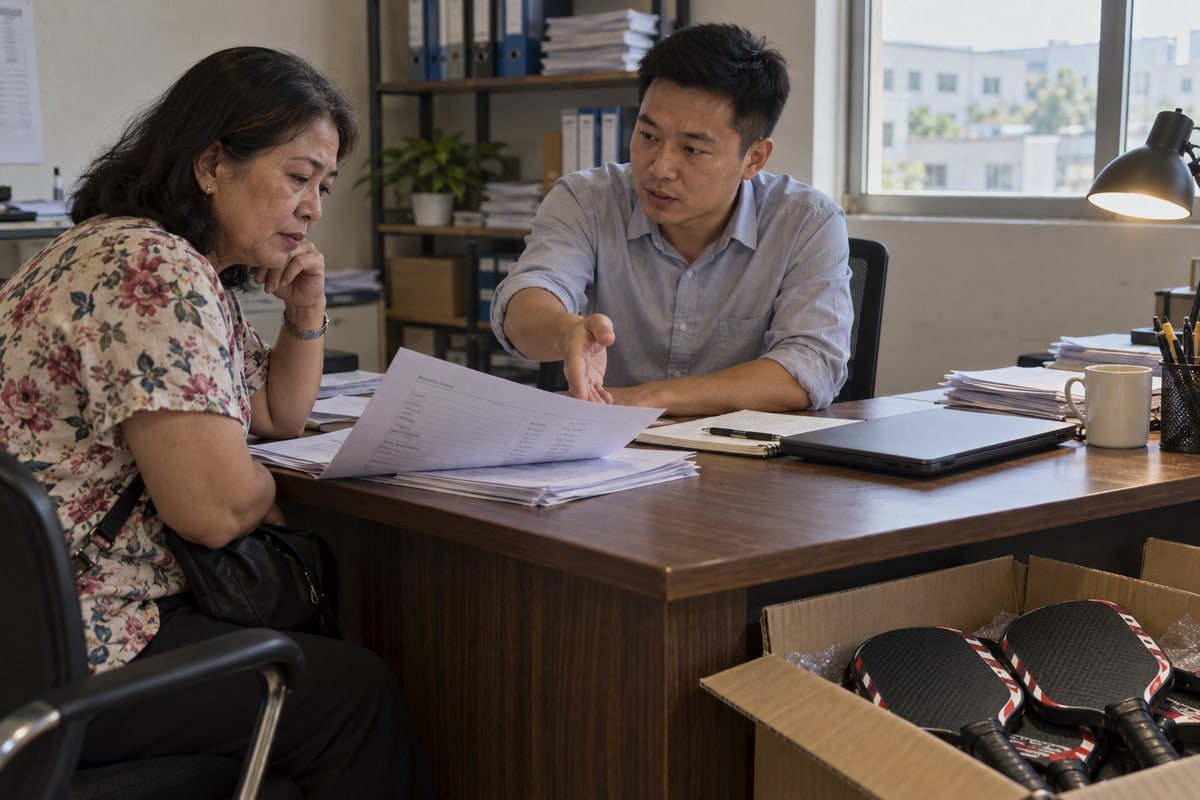
Let me address the objection I hear most often. Buyers tell me sample fees feel like a hidden tax, especially when a design needs two or three revisions, or when a supplier later refuses to honor a verbal refund promise. That frustration is fair, and I have seen it happen. But here is the factory side of the same coin: custom samples consume real materials, labor, mold time, and quality checks, and a portion of buyers simply disappear after sampling. The refundable fee is how factories filter serious buyers from tire-kickers. It protects both sides when it is documented properly.
So do not argue about whether the fee should exist. Instead, lock down how you get it back. Here is the process I recommend to every buyer:
- Ask directly whether the sample fee is refundable or deductible, and at what minimum order quantity the credit kicks in.
- Get it on the proforma invoice, not in a chat message. A written line item is enforceable; a WhatsApp promise is not.
- Clarify revision costs. Ask whether a second sample round carries a new fee or is covered.
- Pay through a protected channel. Alibaba Trade Assurance or PayPal gives you recourse during the prototyping phase.
- Negotiate a Golden Sample agreement. The factory keeps an identical approved sample as the binding quality benchmark for mass production.
That last point matters more than most buyers realize. When our team in Qiaotou holds a signed Golden Sample, every bulk paddle gets measured against it. Disputes about surface texture, print color, or core feel become simple: does it match the Golden Sample or not?
Who Is Responsible for International Shipping Costs on My Paddle Samples?
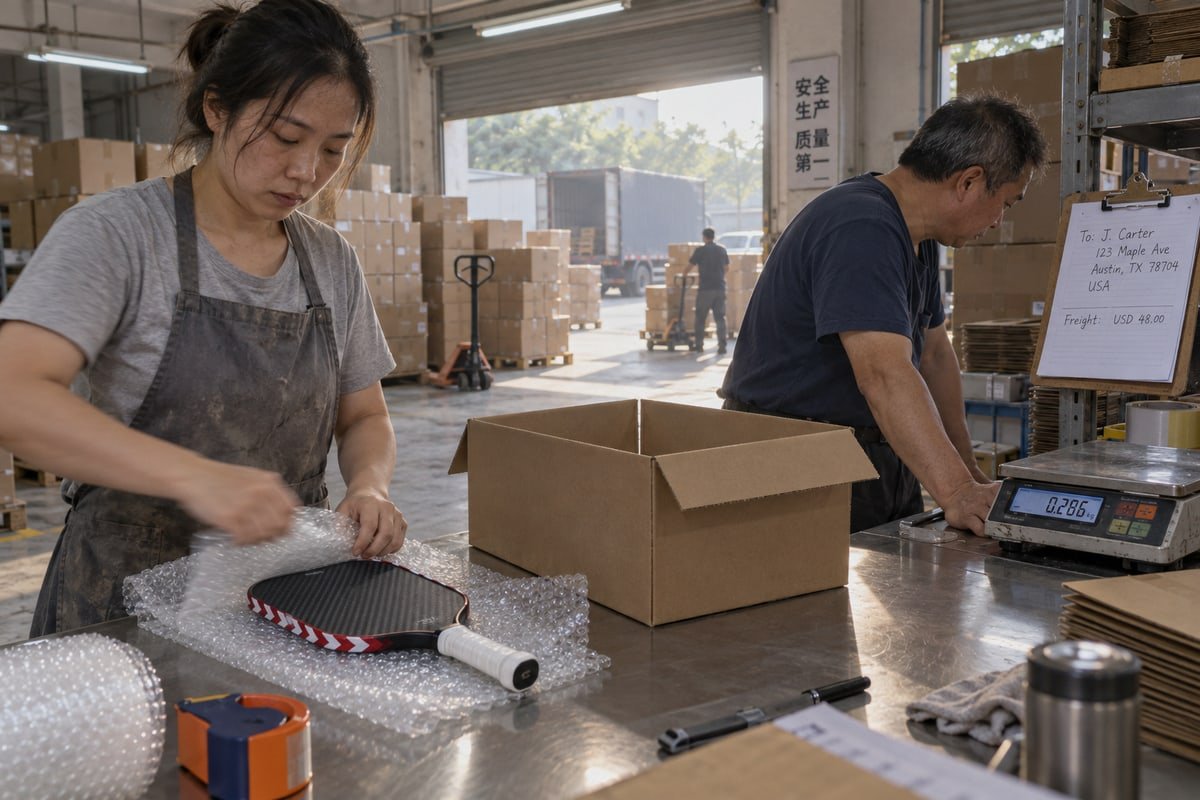
Shipping one 16mm paddle by DHL from Dongguan often costs more than the paddle itself. Dimensional weight, not actual weight, usually sets the courier price.
The buyer pays international shipping on paddle samples in nearly all cases. Express courier charges via DHL, FedEx, or UPS typically run $25–$120 per shipment. Suppliers only cover freight when courting large accounts or under specially negotiated DDP shipping terms.
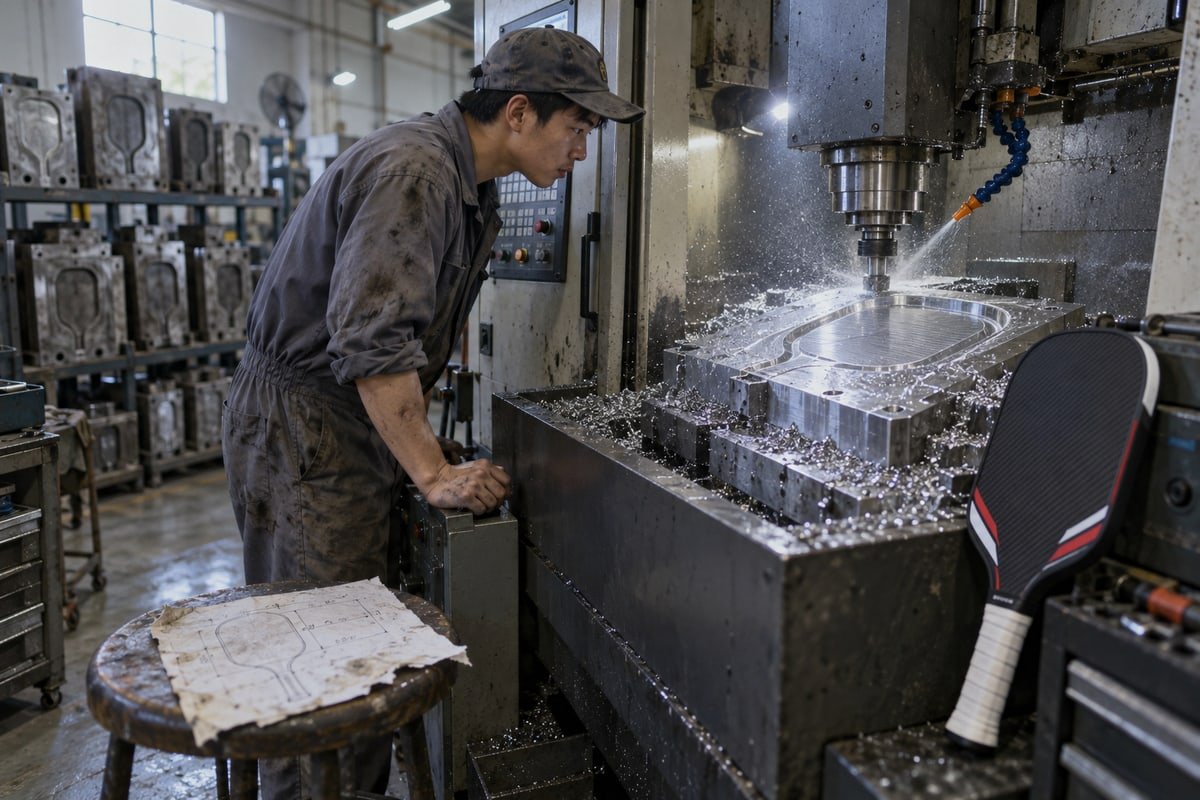
In my experience exporting to the United States, Canada, Australia, and Southeast Asia, this is the cost that surprises buyers most. A $50 sample can carry a $90 freight bill. A light single-paddle shipment might land at $25–$60, but fuel surcharges and dimensional-weight rules on a boxed paddle frequently push international freight charges to $50–$120. The box is long and wide, and couriers bill on volume, not just kilograms.
Here is how your shipping options compare at the sample stage:
| Shipping Method | Typical Cost for 1–3 Samples | Transit Time | Best For |
|---|---|---|---|
| Express courier (DHL, FedEx, UPS) | $50–$120 | 3–5 days | Urgent samples from one factory |
| Chinese freight forwarder consolidation | $25–$60 shared cost | 5–10 days | Comparing samples from several factories |
| Sea freight (FOB terms) | Lowest per unit | 25–40 days | Bulk orders only, never samples |
How to Cut Your Sample Freight Bill
The smartest trick I see savvy buyers use: hire a domestic Chinese freight forwarder to consolidate samples from multiple paddle factories into one international shipment. Instead of paying three separate courier bills, you pay one. We ship to forwarder warehouses in Shenzhen and Guangzhou regularly, and it works smoothly.
Watch the De Minimis Threshold
One warning for US buyers. A single sample usually falls under the $800 De Minimis limit, so no duties apply. But if you order multiple high-end carbon fiber prototypes in one consolidated box, the declared value can cross that threshold and trigger unexpected customs duties 2 and brokerage fees. Plan your consolidation with that number in mind.
Also keep perspective. Once you move to bulk ordering, sea freight under FOB terms becomes dramatically cheaper per paddle than any express option. The shipping question stings most at the evaluation stage, then fades at scale.
How Long Does It Take to Receive My Custom Pickleball Paddle Sample from China?
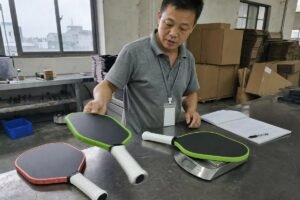
Our technical team hot-presses sample paddles on the same lines as bulk orders. A Gen5 PP honeycomb core needs proper curing time, so we never promise overnight prototypes.
Plan for 10 to 20 days in total: 7–15 days for sample production in China, plus 3–5 days for air express delivery. Complex prototype development involving custom molds or new carbon fiber layups can stretch the full timeline to 25 days.
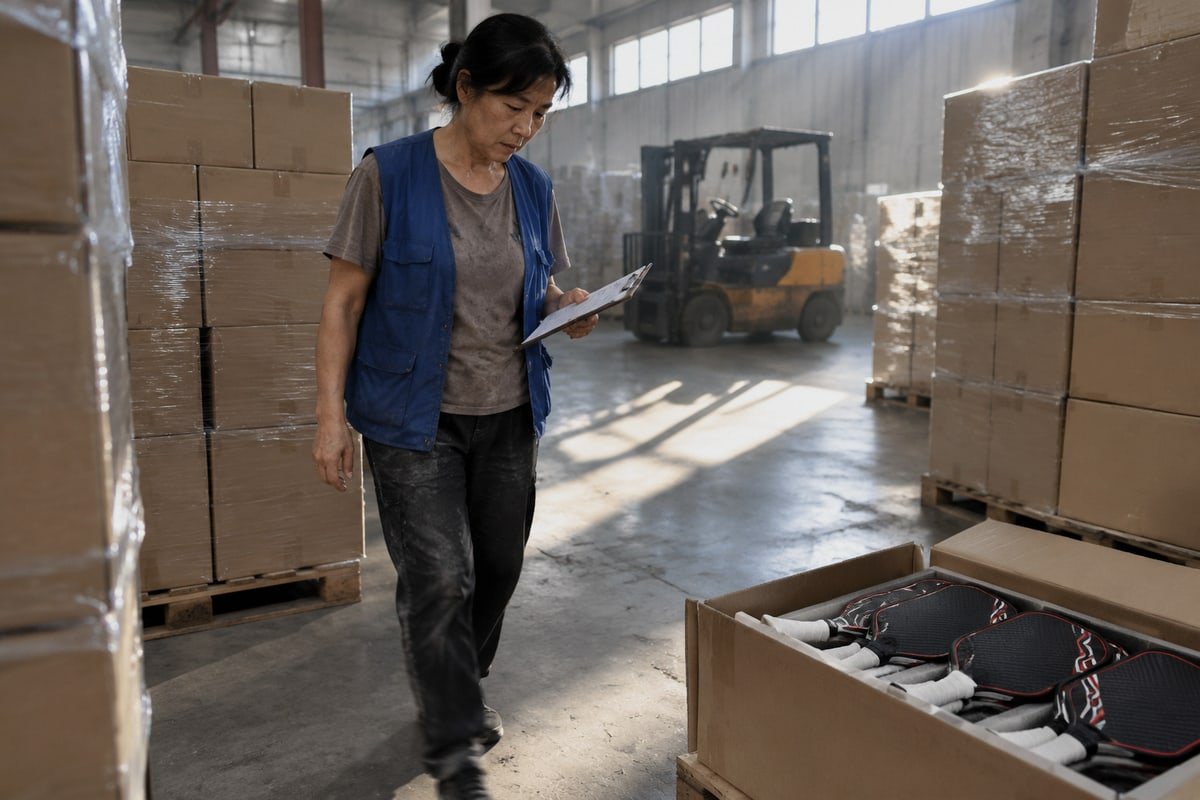
A real sample built with production materials takes real time. When Marites, one of our long-term clients in the Philippines, ordered her first 16mm branded sample, she wanted it in a week. I walked her through each stage instead of overpromising, and she got an honest 12-day timeline that we hit. Here is what that timeline looks like inside our factory:
| Stage | Typical Duration |
|---|---|
| Artwork and spec confirmation | 1–2 days |
| Core prep and one-piece hot pressing | 5–10 days |
| Printing, edge guard, and grip assembly | 2–4 days |
| Quality control inspection | 1–2 days |
| DHL or FedEx air express | 3–5 days |
| Total | 10–25 days |
What Slows a Sample Down?
Three common culprits. First, artwork revisions: every design change before pressing adds a day or two. Second, custom molds: a new shape needs tooling before the first press. Third, documentation requests: more Western brands now ask for raw material traceability during sampling, such as proof of authentic Toray carbon fiber 3 or GRS-certified recycled cores, and gathering those records takes time. I think this trend is healthy, but build it into your schedule.
Why the Sample Timeline Predicts Bulk Performance
Here is a lesson I share with every new buyer. A factory that hits its sample deadline and passes quality control inspection cleanly will usually hit its mass production lead time too. A factory that delivers a late, sloppy sample is showing you exactly how your bulk order will go. Treat the sample stage as a live audit, not just a product preview.
Conclusion
Budget to pay both sample fees and shipping upfront, then negotiate hard: written refund terms, consolidated freight, and a Golden Sample agreement turn that cost into protected investment.
Interested in sourcing the products mentioned in this article? See details and request a quote here:
- https://shuenpickleball.com/custom-t700-pickleball/
- https://shuenpickleball.com/custom-3k-pickleball/
- https://shuenpickleball.com/custom-12k-pickleball/
- https://shuenpickleball.com/custom-18k-pickleball/
- https://shuenpickleball.com/custom-kevlar-pickleball/
- https://shuenpickleball.com/custom-titanium-wire-pickleball/
Footnotes
1. Comprehensive overview of carbon fiber materials, which define the performance and cost of premium pickleball paddle surfaces. ↩︎
2. Official U.S. Customs and Border Protection guidance on duty-free thresholds for international sample shipments. ↩︎
3. Official site for the high-performance carbon fiber material often specified in premium pickleball paddle construction. ↩︎