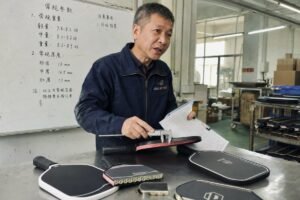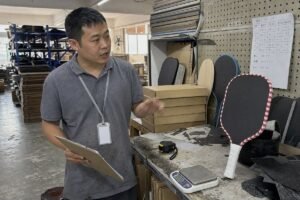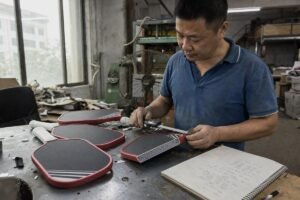
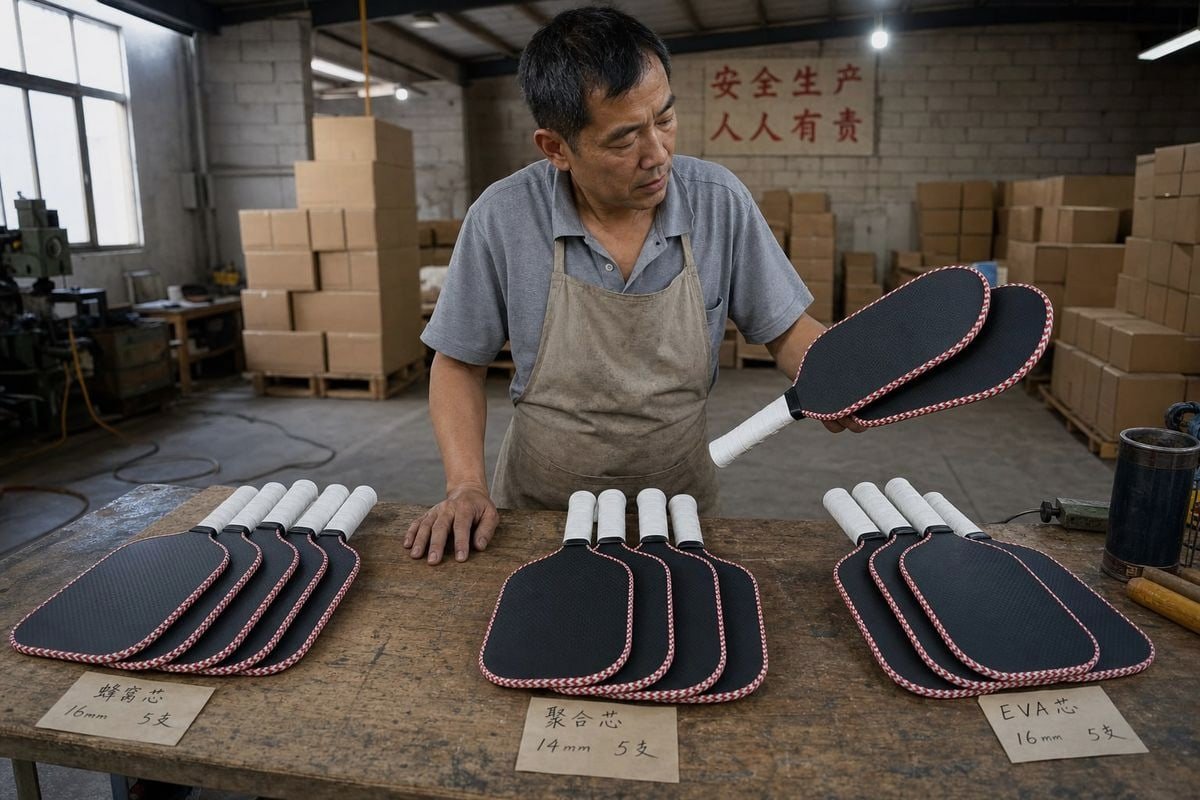
Choosing the right quantity for your first custom pickleball paddles order feels risky. Order too many, and cash sits in boxes. Too few, and you learn nothing. On our production line in Dongguan, I see this dilemma every single week.
For your first custom pickleball paddles order, start with 5 paddles per core type — for example, 5 PP honeycomb, 5 EPP+EVA, and 5 MPP+EVA. Test them, pick the winner, then place a bulk order of 100–300 paddles for that core.
That number surprises many buyers. Most articles tell you 50 or 100 minimum. So let me explain why we recommend a different path, and how quantity, price, and quality really connect.
What Is the Minimum Order Quantity for Custom Pickleball Paddles?
Last month, a buyer from the Philippines asked me this exact question over WhatsApp. Her worry was simple: every supplier she contacted quoted a different Minimum Order Quantity (MOQ), from 1 paddle to 500.
The MOQ for custom pickleball paddles ranges from 1–25 paddles for simple logo work, 50–100 for private label manufacturing, and 200–500+ for full sublimation graphics or custom packaging. At ShuEn Pickleball, we accept small test runs of just 5 paddles per core type.
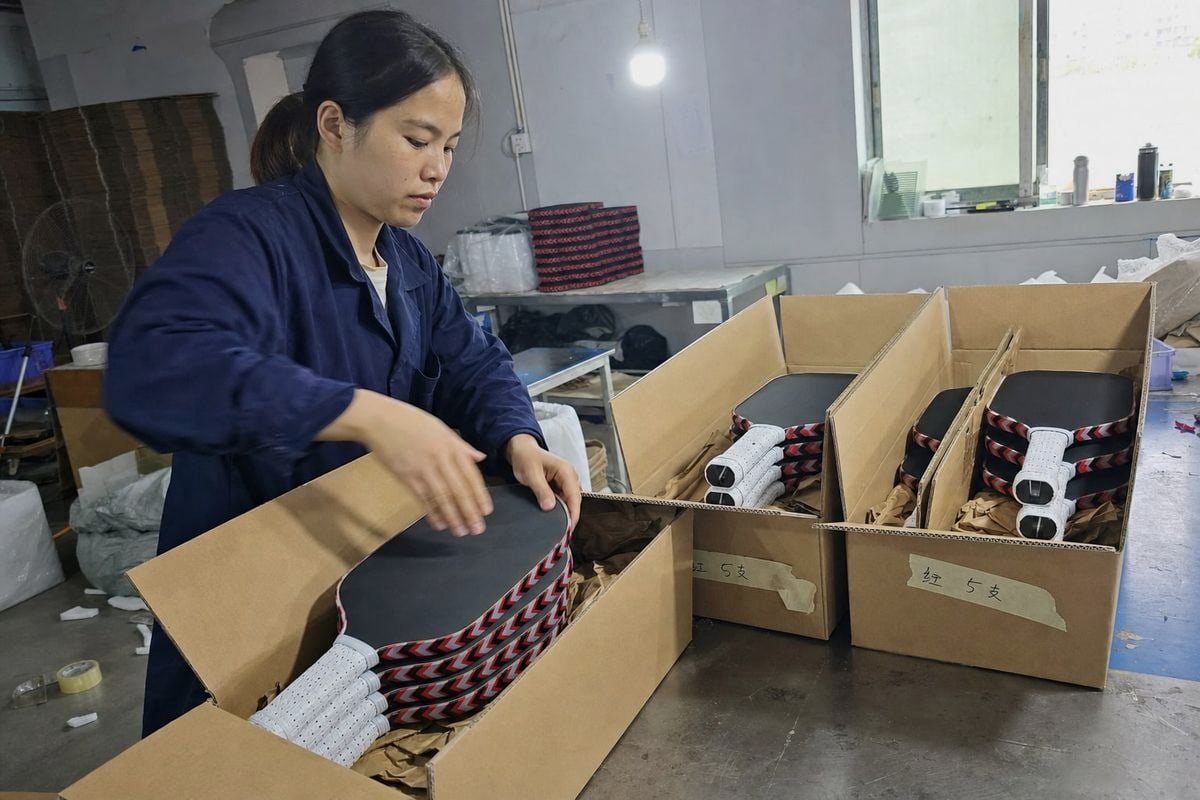
The market is fragmented, not standardized. That is the first thing you need to accept. A retail customizer, a boutique decorator, and a true factory all publish very different minimums. None of them is lying. They simply run different production methods.
Here is how the MOQ ranges break down across the industry:
| MOQ Range | Typical Supplier Type | Best For |
|---|---|---|
| 1–4 paddles | Print-on-demand sellers | Gifts, creators, micro-tests |
| 10–25 paddles | Boutique or corporate-gift programs | Events, club giveaways |
| 50 paddles | Low-MOQ private label programs | Lowest serious factory test run |
| 100 paddles | Common factory minimum | Standard first brand launch |
| 200–300 paddles | Advanced customization runs | Confirmed demand, better unit economics |
| 500+ paddles | Wholesale and distributor programs | Retail rollouts, custom packaging |
Why Customization Level Pushes MOQ Up
The deeper the customization, the higher the minimum. A stock paddle with your logo printed on it can start at very low numbers. Private label manufacturing with your own graphics usually lands around 100–250 units. Full sublimation printing across a carbon fiber surface 1 often moves to 200–500. And custom printed retail packaging typically requires 500+ boxes to be economical, because printers have their own minimums.
Our Approach Is Different
At our factory in Qiaotou, we tell first-time customers something most factories will not: do not chase the lowest MOQ. Instead, order 5 paddles per core construction and treat it as structured sample prototype testing. You are not buying inventory yet. You are buying knowledge. Once you know which core plays the way your customers want, the bulk order almost decides itself.
How Do I Decide the Right Order Quantity for My First Batch?
A lesson I learned early in exporting to the US and Australia: buyers who tested cores before committing almost always reordered. Buyers who jumped straight to 500 units of one untested spec often disappeared.
Decide your first batch by testing before scaling. Order 5 paddles each of PP honeycomb, EPP+EVA, and MPP+EVA cores. Play them, gather feedback, then match your bulk quantity to your sales certainty: 50–100 for market tests, 100–300 for a real launch.
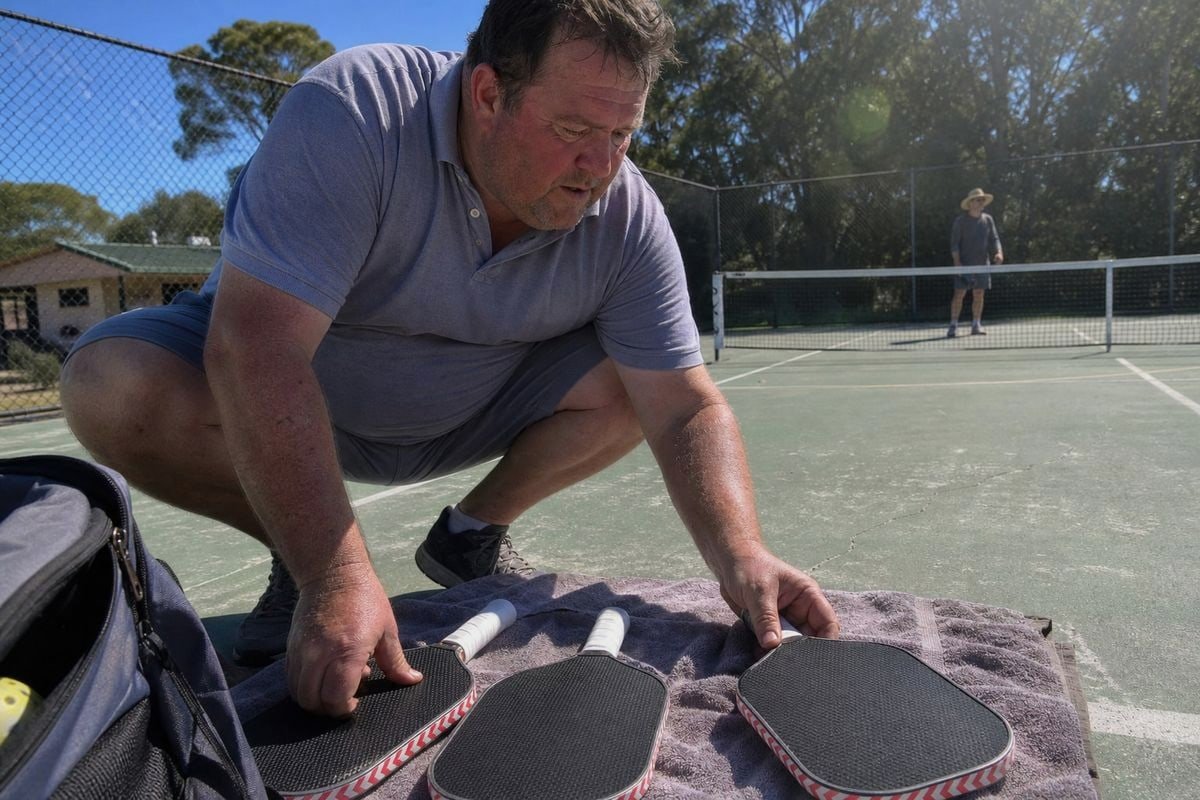
The real question is not "what is the smallest MOQ?" It is "what quantity matches my sales certainty, my budget, and my customization level?" I break this down into a two-stage process for every new client.
Stage One: The Core Test
This is the strategy we recommend at ShuEn Pickleball to every first-time customer. Order 5 paddles per style, and let the core define each style:
- 5 paddles with a PP honeycomb core — the polypropylene honeycomb core is the market standard, balanced for control and pop.
- 5 paddles with an EPP+EVA core — softer feel, more plushness, growing fast in the power-and-forgiveness segment.
- 5 paddles with an MPP+EVA core — a different response profile again, worth testing if your players want extra dwell time.
Play all fifteen. Give some to local club players. Run a small demo program. When you find the core your market loves, we move to stage two: bulk customization 2 focused on that one core. This is, in our experience, the best strategy for custom pickleball paddles. Customers adjust after the first 5, then commit to volume.
Stage Two: Match Bulk Quantity to Your Buyer Type
| Buyer Type | Recommended First Bulk Order |
|---|---|
| New brand, no sales history | 50–100 paddles |
| Private label launch, defined audience | 100–300 paddles |
| Amazon FBA or retailer trial | Around 300 paddles |
| Club or academy rollout | 100–300 paddles |
| Distributor or wholesale launch | 500+ paddles |
Two more practical rules help here. First, size your order to roughly a 120-day sales forecast. Paddle surface textures and core materials 3 evolve fast, and old inventory becomes hard to sell. A healthy inventory turnover rate 4 matters more than a low unit price. Second, consider a small "seed" batch of 20–30 units for local demo programs before your main shipment lands. It builds a pre-order waitlist and validates your price point.
Will a Smaller First Order Affect My Price or Quality?
Here is a trade-off I weigh with buyers constantly: a small order costs more per paddle, but it protects your cash flow. Both facts are true at the same time, and pretending otherwise helps nobody.
A smaller first order raises your per-unit price because setup costs spread across fewer paddles, but it does not lower quality. Reputable factories run 5-paddle test batches on the same lines, molds, and hot-pressing process as 500-unit orders.
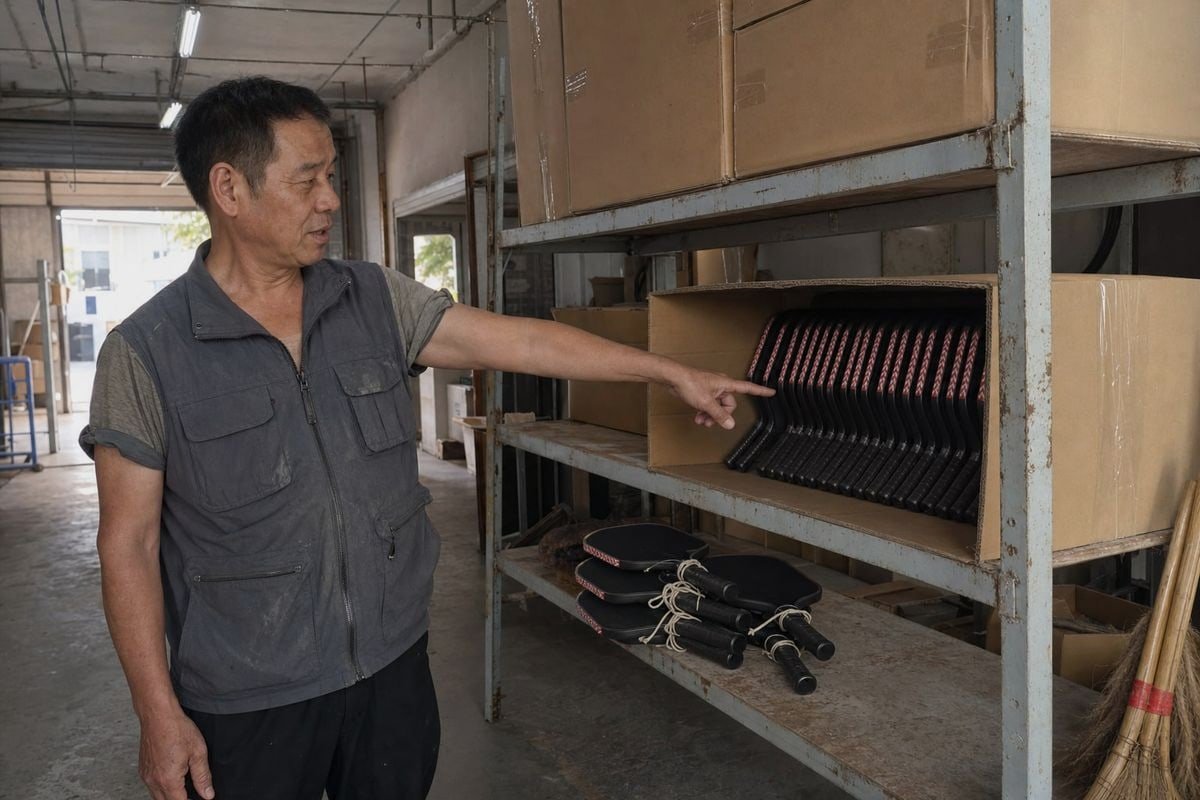
Let me separate the two concerns, because buyers often confuse them.
The Price Side
Wholesale pricing tiers are real across most of the industry. Significant price breaks typically appear at the 500 and 1,000-unit thresholds, sometimes cutting per-unit cost by 20% to 50% compared with small trial runs. Why? Fixed costs get diluted. These fixed costs include:
| Fixed Cost Item | Typical Impact on Small Orders |
|---|---|
| Customization setup fees (printing plates, artwork prep) | Spread over few units, so unit cost jumps |
| Tooling for custom shapes | Can run $1,500–$3,000; avoid it by using stock molds |
| USAP certification per model | Roughly $1,500–$2,500, a heavy load on tiny batches |
| Sampling and prototypes | Fixed regardless of final volume |
| Freight inefficiency | Partial master cartons waste "dead air" space |
Two ways to soften this. First, use your manufacturer's existing stock molds — like the six standard shapes in our catalog — so you pay zero tooling fees on your first order. Second, match your quantities to master carton sizes, usually 25 or 50 units, to keep freight efficient.
One honest caveat: some vendors state flatly that they give no discounts for larger orders. Pricing policy varies by supplier, so always ask for the actual tier table rather than assuming.
The Quality Side
Quality does not scale with quantity at a properly run factory. When we produce a 5-paddle test run with a Gen5 PP honeycomb core 5 and one-piece hot-pressing, it goes through the same process and the same QC checkpoints as a container order. Our technical team of ten checks weight tolerance, face finish 6, grip wrap, and print quality on every batch, big or small. If a supplier delivers worse quality on small orders, that tells you about the supplier — not about small orders. We build our paddles with the same materials and technology as top international sports brands, fully compliant with USAP standards 7, at any volume. USAPA approved paddles must meet the same surface and dimension rules whether you order 5 or 5,000.
Can I Increase My Order Quantity for Future Reorders Easily?
One of my favorite buyer interactions happened over WhatsApp: a client who started with fifteen test paddles messaged me three months later with just four words — "Ready for 300 now." That is exactly how the system is supposed to work.
Yes, scaling up reorders is straightforward once your first batch is done. Your artwork files, specs, and print settings stay on record, so reorders skip setup. Expect shorter lead times, better wholesale pricing tiers, and smoother production planning as volumes grow.
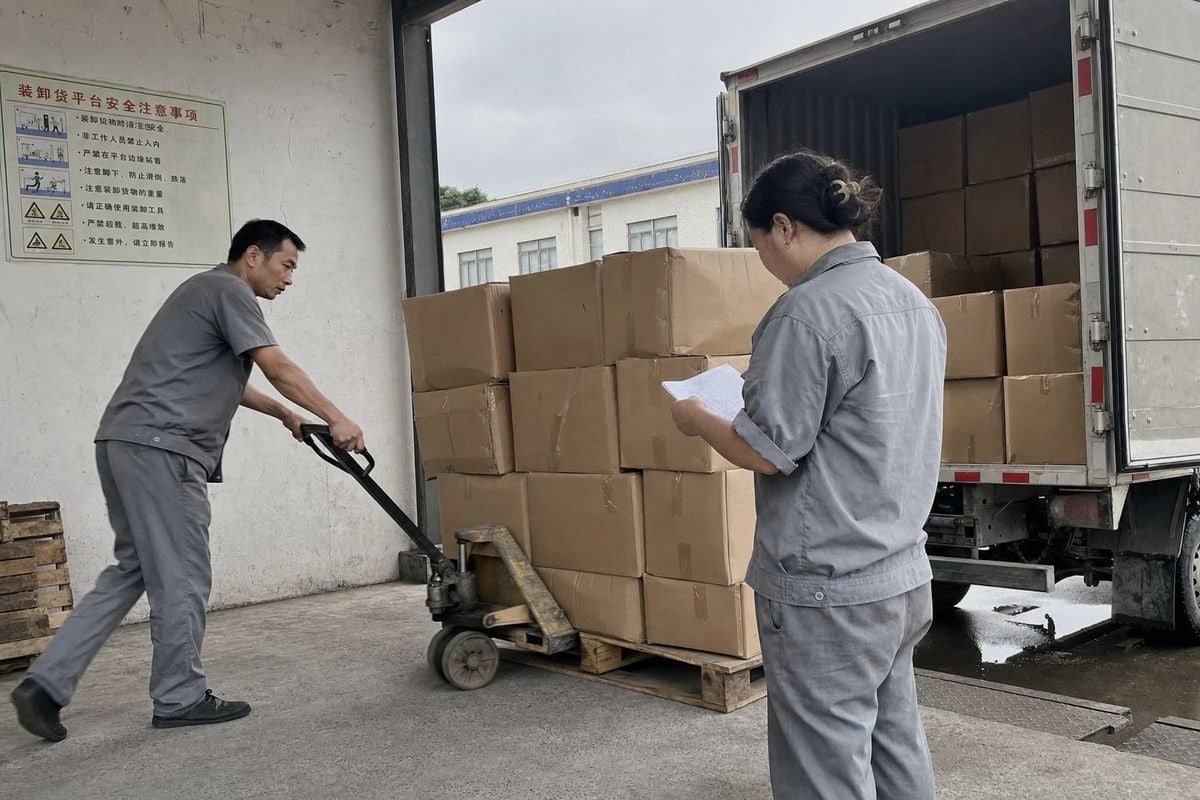
Reordering is where the test-first strategy pays off most. Everything hard happens on order one. Order two is mostly logistics.
What Gets Easier on Reorders
Your first order requires artwork approval, sample prototype testing, pre-production samples, and QC calibration. Plan 45 to 60 days for that full first-order timeline. On reorders, your design files, color codes, core spec, and grip preferences are already locked in our system. The lead time for production typically drops because we skip the entire setup phase and go straight to scheduling.
Pricing improves too. Once you cross higher volume tiers, per-unit costs fall, and you gain leverage to negotiate custom packaging, which usually needs 500+ units to make sense. Many of our Philippine and US clients follow this exact arc: 15 test paddles, then 100, then 300 with retail boxes.
A Simple Scaling Roadmap
- First order: 5 paddles per core type. Test PP honeycomb against EPP+EVA and MPP+EVA.
- Adjustment round: tweak weight, grip length, surface texture on the winning core. Maybe 20–30 units for demo programs.
- First bulk order: 100–300 paddles of the proven spec under your private label.
- Growth reorders: 300–500+ as your inventory turnover rate proves itself, adding custom packaging and new models.
One planning tip: give your factory a rough reorder forecast even if it is not binding. When we know a client plans to reorder in 90 days, we can reserve raw carbon fiber surface material and core stock, which protects your delivery date. Fast, predictable delivery is the number-one concern I hear from buyers, and forecasting is the cheapest way to guarantee it.
Conclusion
Guessing your first quantity wastes money. Testing removes the guess. Start with 5 paddles per core, find your winner, then scale to 100–300 with confidence. Message me anytime to start your test batch.
Footnotes
1. Technical overview of carbon fiber materials used in high-performance sports equipment surfaces. ↩︎
2. Authoritative Wikipedia entry explaining mass customization and its application in manufacturing. ↩︎
3. Technical explanation of core materials used in sandwich-structured composite products like paddles. ↩︎
4. Reliable definition of inventory turnover metrics for efficient business and stock management. ↩︎
5. Technical details on honeycomb geometry used for strength-to-weight ratios in paddle cores. ↩︎
6. Explains industrial standards for surface texture and finish quality in manufacturing. ↩︎
7. Stable overview of official equipment standards and paddle specifications. ↩︎