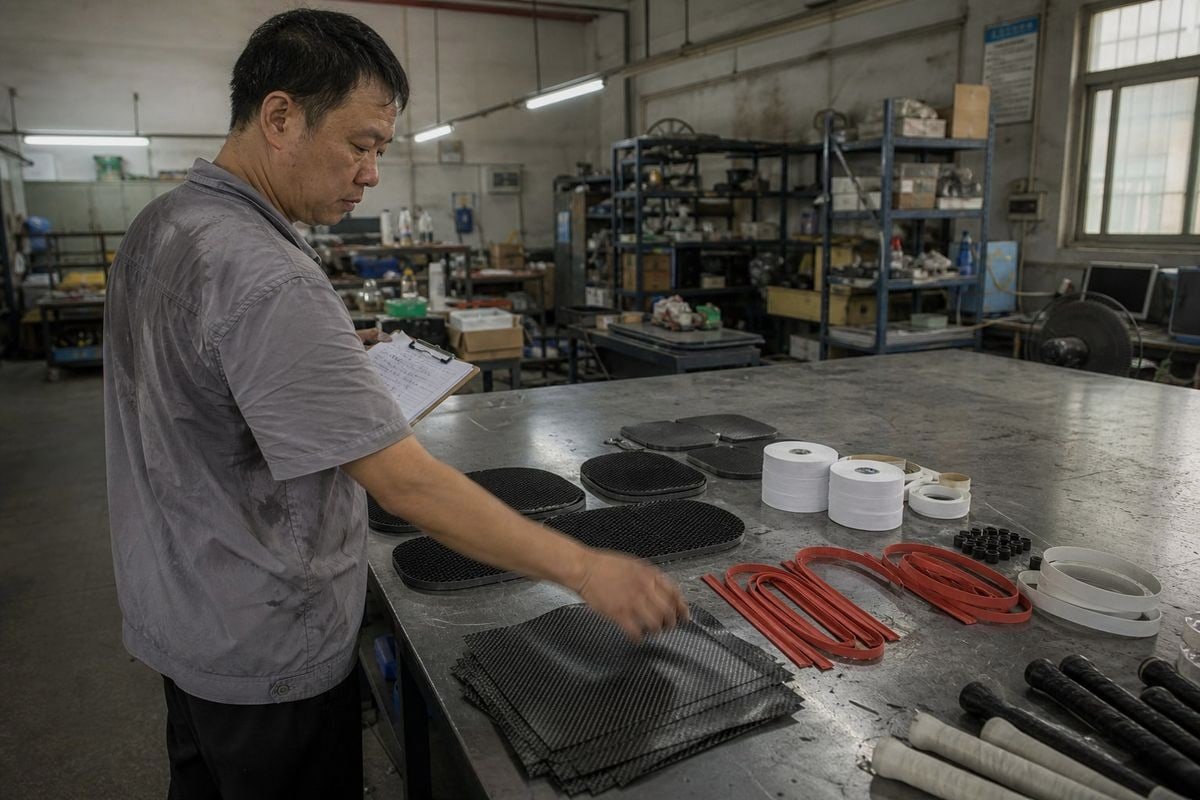
Many buyers ask me which parts of a pickleball paddle they can actually customize during procurement polymer PP honeycomb 1. Order the wrong specs, and you burn budget on paddles nobody wants. On our production line in Dongguan, we solve this by mapping every customizable component before tooling starts.
During procurement, you can customize the pickleball paddle core material, face material, paddle shape, weight, grip size, handle length, edge guard, surface pattern, grip color, rubber ring, end-cap logo, custom graphics, and packaging. Some logo placements require separate molds at an additional charge.
Let me walk you through each customizable part, one by one, so you know exactly what to specify when you place your order.
How can I customize the core and face materials of my pickleball paddle order?
A buyer from the Philippines once sent me a single WhatsApp message: "16mm, Gen5 core, hot-pressed. Price?" That short question covered the two decisions that matter most inside any paddle we build.
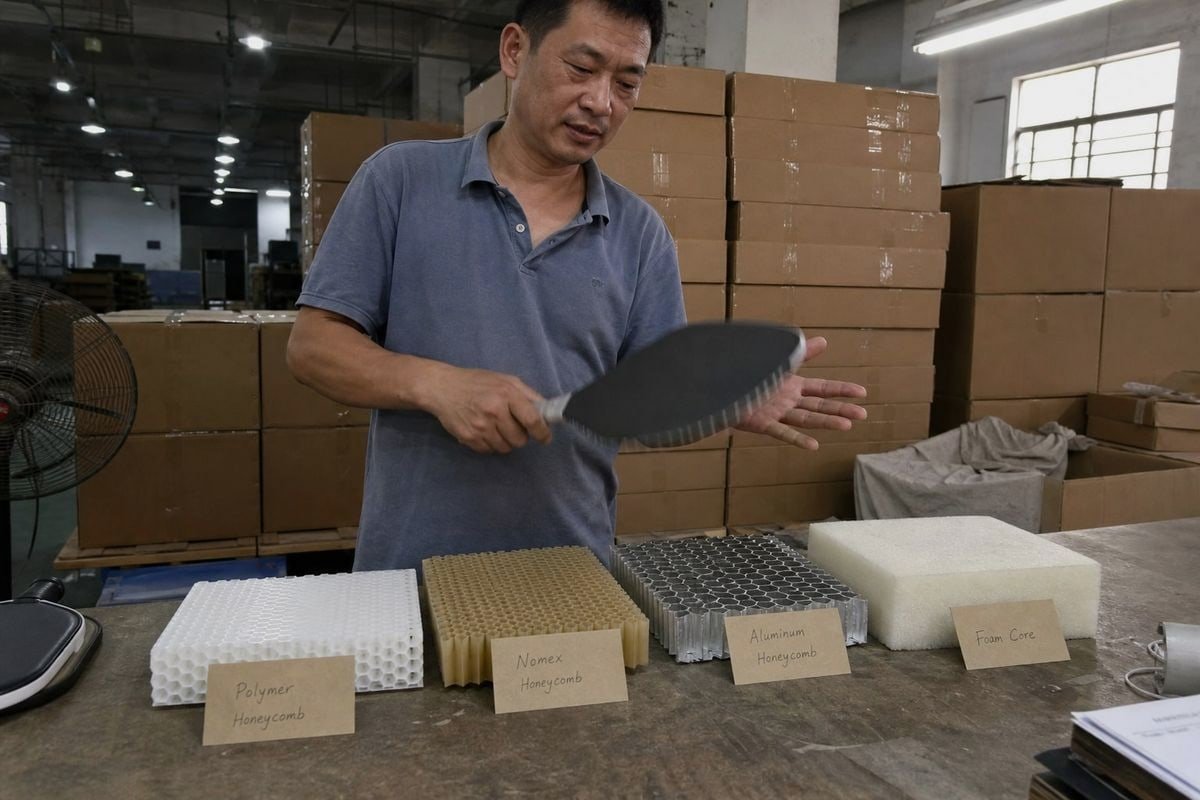
You can specify the core material — polymer PP honeycomb (including Gen5), Nomex, aluminum honeycomb, or dense foam — plus core thickness, and pair it with a face material such as T700 raw carbon, 3K or 12K carbon fiber, graphite, or fiberglass to control power, spin, and feel.
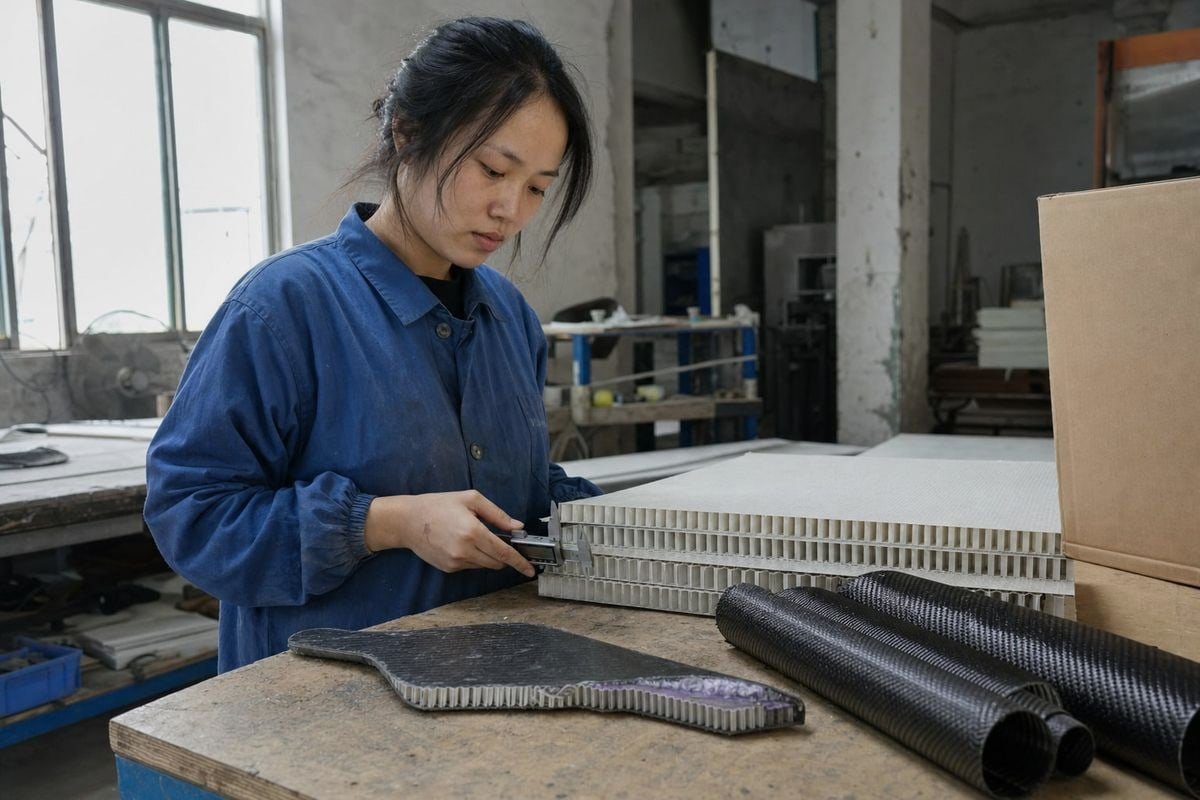
The core and face are the engine of the paddle. Everything else is styling. So I always tell buyers to lock these two down first. In our factory, most private-label orders now specify a Gen5 PP honeycomb core at 16mm thickness, built with a one-piece hot-pressing process. That combination gives a soft, controlled feel with a large sweet spot, and it holds up well under daily club play.
Core material choices
The core dictates power, sound, and durability. Here is how the common options compare:
| Core Material | Feel | Power | Best For |
|---|---|---|---|
| PP Honeycomb (Gen5) | Soft, controlled | Medium | Most brands; USAP-compliant club and pro play |
| Nomex Honeycomb | Firm, loud | High | Power players; older-style builds |
| Aluminum Honeycomb | Crisp, light | Low-Medium | Touch players; niche orders |
| Dense Foam | Plush, quiet | Medium-High | Premium lines; newer designs |
Thickness matters too. A 16mm core favors control and dampens vibration. A 13mm or 14mm core swings faster and hits harder, but the sweet spot shrinks.
Face material choices
The surface material shapes spin and pop. T700 raw carbon has become the top request in our export orders to the US and Australia because its gritty texture grips the ball for spin. 3K and 12K carbon weaves offer a stiffer, more powerful response. Fiberglass gives more flex and power at a lower cost, which suits entry-level lines. We also apply a textured surface pattern during pressing, but I always check it against USAPA regulations 2 on surface roughness before production so your certification stays safe.
What branding options like logo printing and color design can I add to my custom paddles?
The trickiest quote I ever prepared involved a client who wanted their logo in five places. Three of those placements needed new molds, and I had to explain why the price jumped.
You can brand the paddle face with full custom graphics, colors, patterns, and text, plus add logos to the edge strip, grip rubber ring, handle grip, and bottom end cap. Logos on the rubber ring, end cap, and handle each require separate molds at an additional charge.
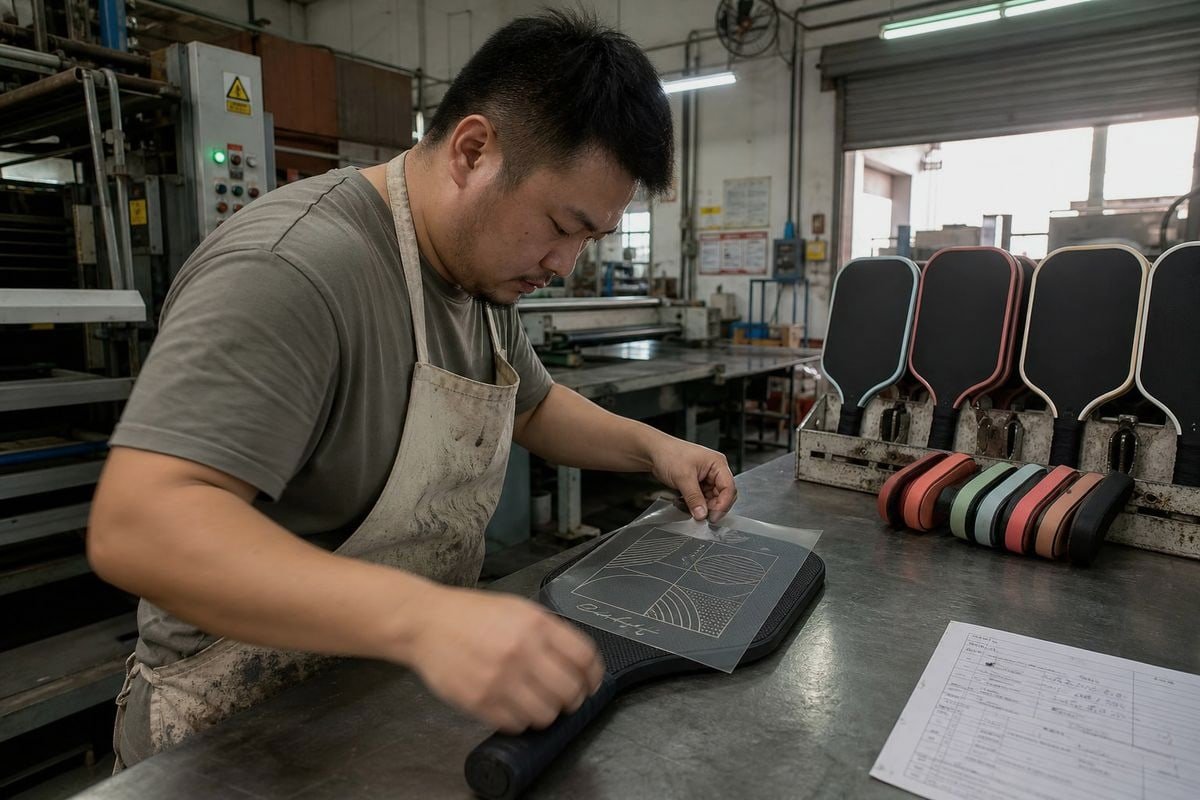
Branding is where your paddle stops being generic and starts being yours. From my own production experience, there are five main branding zones: the paddle surface pattern, the paddle edge strip, the grip rubber ring, the grip color, and the back cover logo on the handle's end cap. Each zone has its own process and its own cost logic.
Printed branding vs. molded branding
Face graphics are the cheapest and most flexible option. We print full-wrap artwork, gradients, signatures, and certification icons directly onto the surface layer before pressing. You can change this artwork between orders with no tooling cost.
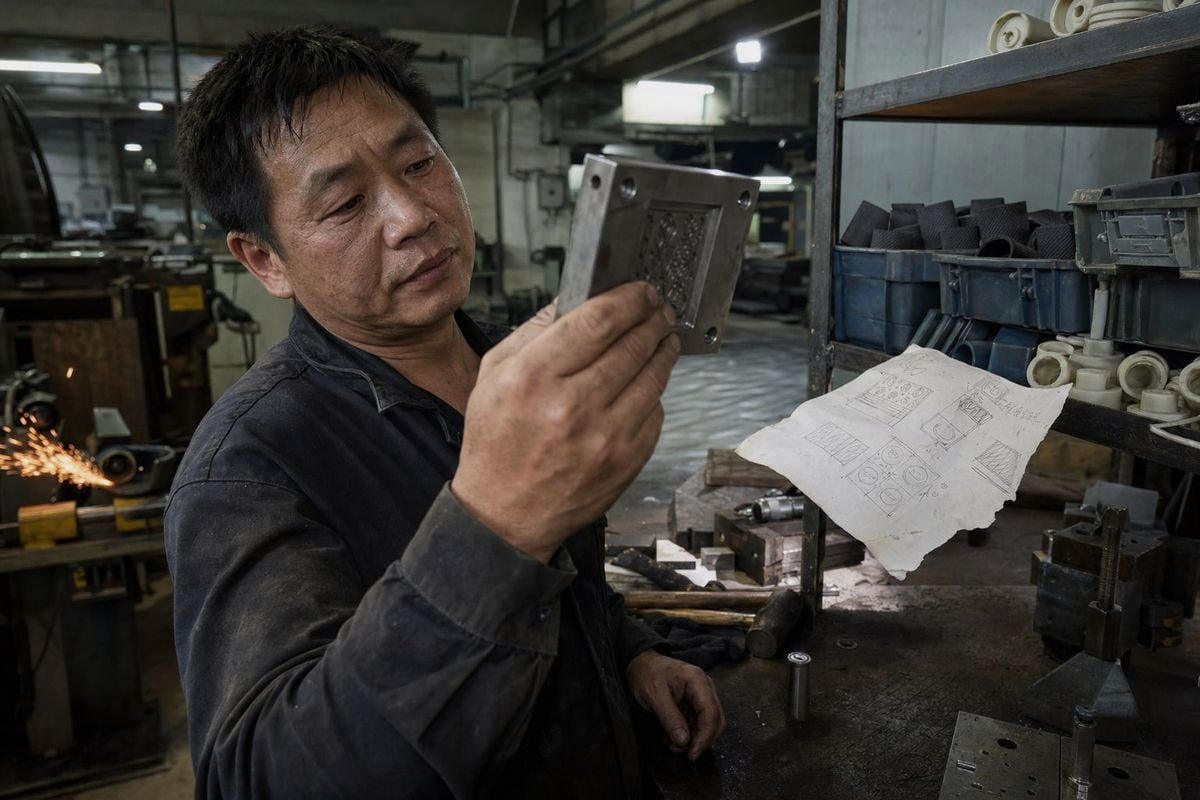
Molded branding works differently. When a client wants their logo raised or debossed on the rubber ring, on the bottom cap of the handle, or on the handle itself, we must cut a separate steel mold for each placement. That mold is a one-time additional charge. I always tell first-time buyers to launch with printed face graphics, then invest in molded parts once their sales volume justifies the tooling.
Where each logo can go
- Paddle face: full custom graphics, brand name, model name, player signature
- Edge strip: printed patterns like the zigzag herringbone design we run on coral-red guards
- Grip rubber ring: molded logo (extra mold fee)
- End cap: molded or printed back cover logo (mold fee if molded)
- Grip wrap: color choice, embossed texture, or printed brand name
Color design covers the edge guard, accent stripes, grip color, and the base tone of the carbon face. We match Pantone codes so your paddle stays consistent across reorders.
Can I choose the paddle shape, weight, and grip size to match my brand's target players?
Balancing reach against maneuverability is the trade-off I weigh most often when helping a brand pick its first mold. There is no single right answer — only the right answer for your target player.
Yes. You can select the paddle shape (elongated, standard, widebody, or hybrid), set the paddle weight and balance point, and choose grip size, grip material, and handle length so the final spec matches your target players' style and hand size.
These three variables define how the paddle feels in the hand and moves through the air. In our catalog, we present shapes exactly like a spec sheet — length, width, thickness, handle circumference, handle length, and weight for each model — so buyers can compare six or more silhouettes side by side before committing to one.
Matching shape to player type
| Paddle Shape | Typical Dimensions | Swing Weight 4 | Target Player |
|---|---|---|---|
| Elongated | Longer, narrower face | Higher | Singles players wanting reach and power |
| Standard | Balanced length and width | Medium | All-around club players |
| Widebody | Shorter, wider face | Lower | Beginners needing a big sweet spot |
| Hybrid | Between elongated and standard | Medium-High | Competitive doubles players |
Shape also interacts with USAPA regulations: combined length plus width cannot exceed 24 inches, and length cannot exceed 17 inches. We check every custom shape against those limits before cutting a mold.
Weight, balance, and swing weight
Static weight usually falls between 7.8 and 8.5 ounces on our builds. But swing weight — how heavy the paddle feels in motion — matters more. A head-heavy balance adds power; a handle-heavy balance adds hand speed. We tune this at the factory through core density, edge guard mass, and handle construction. Some buyers later fine-tune with lead or tungsten tape, but factory-set balance keeps every unit in your batch consistent.
Grip size and handle length
Grip circumference typically runs from 4.0 to 4.5 inches. A smaller grip size boosts wrist action and spin; a larger one adds stability. Handle length between 5 and 5.5 inches suits two-handed backhands. We offer octagonal or rounded profiles, plus ridged or smooth grip textures.
What packaging and edge guard customizations are available for my private-label pickleball paddles?
One lesson I learned early in exporting to the US and Canada: retail buyers judge the box before they ever judge the paddle. Packaging is not an afterthought — it is part of the product.
You can customize the edge guard color, printed pattern, and profile, add protective edge tape, and specify private-label packaging including branded boxes, sleeves, paddle covers, hang tags, inserts, and retail-ready cartons that carry your logo and brand colors.
The edge guard does two jobs. It protects the paddle rim from ground scrapes, and it frames your brand visually. On one of our popular builds, we pair a matte black carbon face with a coral-red edge guard printed with a fine zigzag pattern. That single color choice makes the paddle recognizable across a crowded court. We can match the guard to any brand color, print micro-patterns along it, and align it with an accent stripe running down the face edge.
Edge guard options at a glance
| Option | What You Choose | Cost Impact |
|---|---|---|
| Guard color | Any Pantone-matched shade | Low |
| Printed pattern | Zigzag, herringbone, or custom motif | Low-Medium |
| Guard profile | Slim aerodynamic or standard protective | Medium |
| Edgeless build | Tape-protected rim, cleaner look | Medium |
A slimmer aerodynamic edge profile trims wind resistance and slightly lowers swing weight. A thicker guard adds durability and a touch of perimeter mass, which stabilizes off-center hits.
Packaging tiers for private-label orders
For packaging, I usually offer three tiers. First, a simple poly sleeve with a branded sticker — lowest cost, good for club bulk orders. Second, a printed retail box with your custom graphics, foam insert, and hang tag — the standard for e-commerce brands. Third, a premium set: rigid box, zippered paddle cover with your logo, overgrip included, and a thank-you card. For a small-to-medium private-label brand, tier two hits the sweet spot between cost and shelf presence. We also print barcodes, QR codes, and compliance marks so your shipment clears retail requirements without rework.
Conclusion
Choosing wrong specs wastes money and time. But now you know every customizable part — core, face, shape, weight, grip, edge guard, branding, and packaging. Send us your design, and we will build it.
Footnotes
1. Explains the properties and applications of polymer honeycomb materials. ↩︎
2. Provides official guidelines for pickleball paddle construction and approval. ↩︎
3. Replaced HTTP 403 with authoritative Wikipedia page on carbon fibers. ↩︎
4. Defines and explains the concept of swing weight in sports equipment. ↩︎